Friday, April 12, 2013

The Great Debate: March to the Scaffold

I know I said I would finally be explaining Hyper Inflation here, and I will be.  But there are a couple of points that Vox has made that I simply cannot let stand.  So as much as I loathe the call and response style of written debate, it appears I must resort to it.  I beg your indulgence.

"Nate begins the eighth installment in the series by getting some things factually incorrect. To begin with, Z1 did not begin to decline in July 2008, as it peaked at $52.9 trillion in Q1 2009, a figure it did not reach again until Q3 2011, when it hit $53.8 trillion. 2008 merely served as the warning sign, as total credit growth ceased to keep pace with its 60-year historical rate, thus triggering two quarters of 10 percent growth in the federal debt sector in the latter part of the year. Gold and silver prices certainly did rise during that time, as did the stock market, but this was the result of the near-unprecedented increase in federal spending which was taking place at that time; even as the Household and Financial sectors contracted, the Federal sector expanded by $3.3 trillion.Tax expense:  455.00  820.00"


Given that Vox acknowledges that there was a period of time when credit was contracting... and prices were going up, the actual timing of that period, be it July of 08 or Q1 09 is irrelevant.  He acknowledges that it happened.   The rest of this is elaborate hand waving.  Vox here is suggesting that the fact that the federal government is spending the new money, and that it somehow doesn't count as inflation.   I am beginning to see the problem here.   Vox has literally just said, "Yeah but it doesn't matter because its government spending."  If we were arguing about the health of an economy... yes... we could certainly point to the distinction and say, "Its not real growth."   But we're not debating that.  We're debating inflation vs deflation.  Inflation is never real growth.  That's the point.  Of course its government spending.  Unless Vox wants to claim that inflation isn't possible in a communist regime, then he must acknowledge for the purposes of this debate, the sector the increase is happening in doesn't matter.  That just tells you who got to spend the money that was stolen from you.


Vox later reinforces this error.


"Nate is looking at Z1 - or to be more precise, L1 - as a whole rather than in its component parts. This is not unreasonable, but unless one looks at the component parts, one cannot understand the importance or the consequences of the shift in the nature of the credit market that has seen the federal element double from 10.3 percent of the entire credit market to the current 20.6 percent."


That's because for the purposes on inflation it doesn't matter who's spending the new money.  Its new money.  Government spending is merely the delivery method for injecting it into the economy.  That method is neither limited, nor temporary.   Nor is there a limit on how much money the Fed can "lend" the government to spend. Because when a federal reserve bank is lending money to its government it isn't lending.  It is straight up counterfeiting.  


Then... yet again... Vox reinforces his error... and even manages to compound it.


"What Nate sees as evidence of inflation, the modestly higher prices in the gold, silver, and equity markets, is largely limited to the areas of direct federal intervention.  This is why health care and higher education prices are still rising to new heights, while real estate prices are struggling to get back to where they were.  The areas that are reaching new heights are where the outstanding $11.6 trillion in government credit is flowing.  That is where the malinvestment is still being directed."


No.  It is not limited to any areas at all.  It is literally visible across the board.  It happened everywhere.  It even happened in the housing market where it was detectable by the fact that the housing values didn't sink nearly as much as they should have.  And again, Vox is suggesting that where the government spends the new money somehow matters.  It does not.  What matters is new money is being injected into the system.

All of this was bad enough but I nearly fell out of my chair when I read this:

"I note that each of these hyperinflationary scenarios were very short-lived and tended to be closely tied to serious political upheaval.  The longest period is two years, which happened twice in China during the 1940s.  Note, however, that these hyperinflations tended to take place AFTER the wars or major political upheavals; the frequency with which they take place after independence is gained by a nation is reminiscent of the high inflation that plagued the American colonial currencies and the Continental Dollar.  If any hyperinflation were to take place, history suggests it would likely take place after the collapse and political chaos; it would be a result of it, not a cause."


Setting aside the fact that Vox just argued that hyper inflation isn't likely because it follows war and political upheaval, and everyone with a brain is predicting war and political upheaval...  I cannot help but note that war and political upheaval are expensive.  Particularly for the losers.  The losers also suffer because their citizens lose faith in their governments.  So you have a massive amount of debt you'll never be able to pay back, and you have citizens that don't have any faith in their government.  What do we see in the United States right now?  We see more debt than can ever be paid back.  And at risk of sounding like a Cambridge economist it appears we've reached a point where America's faith in its government is at a perpetual all-time low.  I will be explaining why that matters shortly.


"Remember, it's not enough to merely print the money. The amount printed and distributed has to be greater than the continuing contraction of private credit and the evaporation of bank deposits.  And keep in mind that the combined $4.2 trillion decline in outstanding Household and Financial sector credit since 2009 alone exceeds, by a factor of nearly four, the ENTIRE AMOUNT of U.S. currency presently in circulation."


And by Vox's own metric, price, they have been and are doing, just that.  Excepting of course that private credit has nothing to do with it.  Deposits are all that matter.  As we have seen proven by the fact that prices went up while credit was declining.    Vox wraps it up with a bait and switch:


"Nate is correct to note that people are becoming increasingly drawn to holding cash in the hand, but he is forgetting that when cash becomes more valuable in this manner, it is strongly indicative of a deflationary environment, not an inflationary one.  In an inflationary environment, one wants to take on more debt and hold less cash. In a deflationary environment, one wants to avoid debt and hold more cash.  The intellectual gymnastics notwithstanding, one's true position on this matter can be ascertained by one's material preferences and actions."


I made no such claim about people in general.  People in general are not drawn to cash at all.  The point I made was that you, the newly enlightened reader, upon enlightenment were drawn to cash.   Vox knows full well that I have been telling everyone to get out of cash likely as long as he has.  This actually brings a question to mind.  I am hording gold and silver and suggesting you should be doing the same.  Does anyone here think Vox is hording cash?  


Enough of this.  Its abundantly clear that Vox simply doesn't understand how Hyperinflation is going to happen.  He looks at all these big numbers and and throws up his hands and says literally... Deflation is inevitable!  Come along folks.  Its time we left the cave.  Because right now you're still just like the people in the cave in that allegory of the people in the cave by that greek guy.


The first thing I want to make you understand is that hyper-inflation is not the same as inflation.  Inflation is an increase in supply.  Hyper inflation is a catastrophic event that happens in different ways in different economic systems.  Its like death.  There are really only a few ways humans die... but we can get to them in a near infinite number of ways.  You can drown or you I can stick your head in a bag.  Either way you die of a lack of oxygen to your brain.  Even if I slit your throat and you bleed out, the mechanism for death is still a lack of oxygen to your brain.  Drowning and having your throat slit appear very different but the mechanism of death is actually the same.


Hyper-inflation is like that.  Its a mechanism for death.  Currency death to be specific, and we can get there in a number of ways.  These ways vary depending on circumstances like the superficial structures men have constructed on top of the actual economy.


For example in controlled economies like the USSR hyper inflation's delivery method is easy to spot.  The government just keeps spending and spending and raising everyone's wages until things go boom.  But what is the "boom" really?  Is it really just an out of control train?  Why can't they just stop printing new money?

Remember back when I explained what money is?  Remember how I talked about how there is a constant commodity competition?  it never stops.  There is a constant struggle to decide what people will want.  The commodity people want the most, is the commodity that will be the easiest to trade in the future... and therefore becomes the money.  

Now... when a government intervenes and says, "You will use X as money." they they have short circuited this competition by giving an un-natural advantage to one commodity over the others.  However that comes with a cost.  People want something they would otherwise not want because the government says so.  This works as long as people have faith in the government.  They have faith in the government and that faith gets transferred to the paper slips or magic deposits.  If they lose faith in that government.. like after losing a war... or after a big political change...  they can also lose faith in their currency as well.  By that I mean, they no longer have faith that they will be able to exchange their paper slips for the things they want and need.       

Folks.  Hyper-inflation is not an increase of the money supply.

The rapid catastrophic increase in the money supply is a symptom.  It is not the cause.  


Hyper-inflation is what happens when people decide that the fiat money they have in their pockets and in their  accounts is no longer going to be honored in the future and start spending it as quickly as possible.  That is the unstoppable train of inflation.  The printing presses cannot be stopped because the people will not stop spending the money as soon as they get it.  They don't want the money.  There are other commodities that they have more faith in, but the government has interfered and forced them to use this crap that they don't want.   This is evidenced by their behavior.  The International Accounting Standards Board established this list of criteria to diagnose hyper inflation:


  • The general population prefers to keep its wealth in non-monetary assets or in a relatively stable foreign currency. Amounts of local currency held are immediately invested to maintain purchasing power
  • The general population regards monetary amounts not in terms of the local currency but in terms of a relatively stable foreign currency. Prices may be quoted in that currency;
  • Sales and purchases on credit take place at prices that compensate for the expected loss of purchasing power during the credit period, even if the period is short;
  • Interest rates, wages, and prices are linked to a price index; and
  • The cumulative inflation rate over three years approaches, or exceeds, 100%


What we see here is a clear pattern of people rejecting the cash (I say cash but it works for whatever is represented in the deposits as well, though generally the deposits disappear as folks stop bothering with banks entirely) their government is telling them they have to use.


This is why I was amused when Vox suggested that I was forgetting that in a deflationary environment people want their cash.  I am not forgetting it.  That behavioral difference is key to my case.


During the american great depression people horded cash.  They buried it in their backyard and hid it in mattresses.  In Wiemar .. people wallpapered their houses with it.  Literally.  The key is, American's retained faith in their government and therefore the purchase power of their money.  In Wiemar they had enormous debt, and had just lost a major war.  They did not maintain a faith in their government and therefore lost faith in their fiat money.


The reason hyper-inflation often follows war and political upheaval is because those are two excellent reasons for folks to lose faith in their governments.  As further evidence of this I point once again to Weimar.  Note that after the hyper-inflation a new leader emerged and restored faith in the government and the next decade was referred to as "The Golden Age of Wiemar".  This should also bring to mind FDR and the fact that in spite of his rampant stupid... people had faith that he was going to save them.  Thus they never rejected their fiat money.


That is why the broad definition of fiat is more important than the specific credit nature.  Because once people lose faith in the money... its not money anymore.  Once it stops behaving as money, what it represents or how it is created or how it gets delivered into the system doesn't matter.  Because no one wants it.  Forced to take it, they will get rid of it as soon as possible.


So... Hyper-inflation starts with people rejecting their fiat money.  Practically that means they stop saving and start spending.  They spend as soon as they possibly can.  This drives up prices and creates the unstoppable demand cycle that forces the government involved to simple change the rules and crank up the printing presses.

Did you catch that?   The important phrase there is "change the rules".

Vox and other deflationists are deflationists because at heart they are system guys.  They understand the system and how it works.  What they ignore, is that the system can be changed and will be changed.  They will have no choice in the matter.  Hyper inflation isn't a decision that is made by governments or central banks.  Its made by people.  Now in some cases governments can take actions deliberately to cause hyper inflation to happen but ultimately the mechanism is the same.  The people reject the fiat money that they are legally being forced to use.


That is one way we get to Hyper-inflation.  But there is another way as well.


Right now the dollar is the world's foremost reserve currency.  I say foremost because its not the only reserve currency out there.  Its just the one folks have the most of.  That creates and sustains enormous demand for US dollars.  If one looks at international activity during the financial crisis of 2008 we see that folks actually scrambled to get dollars.  Demand for US dollars world wide went up.  That in and of itself helped to disguise the inflation within the US internally.  This is because generally speaking folks internationally figured if anyone was going to make it through the collapse it would be the US.  I am trying not to laugh as I type that.  Its like saying, if anyone is going to make it through this nuclear blast it will be that guy standing at ground zero shouting about the bomb not really being a bomb at all.  Never the less...


Right now there is an unknown amount of dollars deposited in bank accounts and held by governments around the world.  The interesting bit?  The Fed has no idea how much.   I am going to repeat that.  The US Federal Reserve has no idea how many US dollars are floating around outside our borders.  Right now that money is mostly not doing anything.  Its just sitting in accounts.  It has no "velocity" as we call it in economic terms.  

Any ideas what happens when those folks decide they don't want US dollars anymore?  They spend it.  Ya know what happens when they all start spending it?

Right.   Kaboom.  Think back to what happened to the price of platinum when the USSR up and dumped tons of it on the market.  Now imagine if everyone else dumped their platinum too... and in response the USSR just kept dumping more and more platinum.  There is a finite supply of platinum in the world.  Dollars?  Not so much.

As the money that was just sitting around gets re-injected into the system the price of US dollars goes way down.  As that price goes down...  people lose purchase power.  As people lose purchase power... they spend more to get out while the getting is good.

And thus the cycle is born.


Again.. the credit nature of the money is irrelevant.  The money is rejected and new rules will be written.


That is why I rejected Mises' definitions and instead focused on what makes the money the dominant commodity in one going commodity competition.  Because if you have an artificial advantage like fiat... then once that advantage is taken away... you get a disturbance.  The people reject the former money and pick a new money.  This happens in different ways.  It can be relatively smooth in the case of a conquered nation switching to new money issued by the invader... or it can be ugly... as in hyper-inflation when the government tries to keep the dead currency alive via printing and spending.


So not only do we now see that deflation is not only not inevitable... its incredibly unlikely.  


We are seeing signs already.  The dollar is being rejected.  Right now china is negotiating a deal to trade directly with Australia without dollars.  This is a big deal.  


Iran is no longer pricing its oil in dollars.  This is also a big deal.


We have people rejecting the dollar here at home as they spend and spend.  We have celebrities who have suggested their contracts should be negotiated in Euros.   And think about it.. that was before the printing got good and started.  We now have several states considering passing laws making Gold and Silver legal tender.  These are behaviors associated with hyper-inflation people.  It is not only going to happen... it is going to happen sooner than you think.


So right now we have two separate mechanisms... an internal... and external.. pointing to the rejection of the US dollar.  Both lead to the same place.


We are entering what historians call.... interesting times.  In the immortal words of Admiral Josh Painter... 


This business will get out of control. It will get out of control and we'll be lucky to live through it.


ok well... you'll be lucky to live through it. 


I'll be fine. 


As for the debate... I suspect Vox now finally realizes how thoroughly the rug has been pulled out from under him.  We were never debating what he thought we were debating.  My case was never what he thought it was.


Physician!


How does thy medicine taste?


Thursday, April 11, 2013

Cognitive Dissonance

So... it appears that there is a big brouhaha over some ingredients in the dog food Beneful.  Most of it centers around Purina's decision to include propylene glycol in the product.

So dog owners are outraged.  Outraged I tell you to have learned that they have been feeding something so awful to their dogs.

One wonders...

If you don't want to feed it to your dogs...  Do you think you should be injecting directly into your newborn baby?

Propylene Glycol is a stabilizing compound used to prevent accidental freezing.  Its common in vaccines   In fact all vaccines have it, or something very similar to it in them.

I wish these dog lovers cared as much about their kids.

Tuesday, April 09, 2013

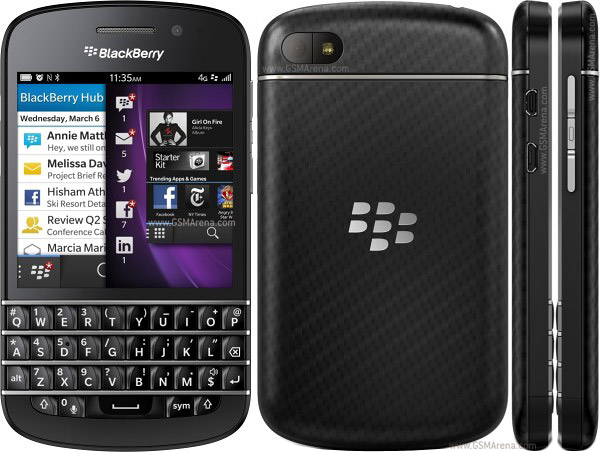
Blackberry Q10

BlackBerry Q10

Porn.

Total porn.

This comes out in just a few weeks.  You can get it in white too.  The battery life is rumored to be insane.

blackberry z10 review


Finally... the Canadians got something right....

Right now I'm doing the impossible. I am writing a blog post... with one thumb. let's see you do that with your iphone.


I have had the blackberry z10 for a week now so I thought it was time to fill y'all in. I think the fact that I am using it to write this when perfectly good laptops are available says plenty. Don't you?

Let me start by saying this... I used to lose my razr maxx at least once a day. I have yet to lose the z10... because I simply can't make myself put it down.

A smartphone is a tool... well several tools actually... so I will break the review down like that. How does it perform in its various roles?

As a communication device:

It is likely the best in the world bar none. The typing experience is amazing. I hate on screen keyboards and yet here I typing up a blog post on one. Everything is fast. A text or call or email comes in and no matter where you are or what you're doing with the phone a single swipe let's you handle it... or you can just give a quick peek and ignore it. Everything flows.   I don't mean you exit your app or game or whatever and respond to the text or email.  I mean you swipe... reply... and swipe again and you're right back where you were doing what you were doing.  You don't exit the browser to respond to an email.  You just flow into the email then to the calendar... then to contacts... then to twitter... and eventually flow right back into the browser where you were.  No stupid home button crap.


As a browser:

It is crazy good. And crazy fast. I hate browsing on mobile devices... ok well I used to.  Now I do it a lot. another cool tidbit... I have multiple wireless networks set up around my house. as I walk around it automatically switches between the networks without even telling me. It just happens. Like it is all one big network. As signal strength weakens on one network and gains on another... it switches.  like magic.  HTML5 performance is fantastic... and oh look!  I can view flash pages.  I can actually use youtube.com. So thanks... but I don't need an app for that.


Media consumption:

Fantastic. I read my Kindle books.. rock my tunes.. watch my movies... everything.  No netflix yet.  There is a workaround but its not a big deal to me.


Battery life?

I have never had to top it off. I use it hard all day
 I don't know what else to say. Charge it at night. That's all.


Apps?

I am not a huge app guy. Why do I need apps with a browser this good? Example... there is no Blogger app. android has a Blogger app. Yet here I am blogging.  That said there are lots of good apps and good games... but it is a new ecosystem.  On the other hand... you can side load android apps and run them just fine.  I mentioned that right?  It runs android apps.


Camera?

  I am not sure its as good as the one on my old blackberry 9810... but I really like it.  The timeshift feature just rocks.  The camera has a learning curve and we're still making friends.  Sometimes there are low light issues.  Haven't quite figured it out yet.


Overall?

It's what God intended cellphones to be.  Seriously.  If you're into getting shit done... this is your phone.  Whatever it is that I have to get done... gets done faster with the Z10.

Try it. Maybe it isn't for you. Maybe it is.

*** UPDATE***

I've decided to demonstrate with a concrete example what I mean about speeding things up.  An iPhone5 is here on my desk next to my Z10.  The iPhone5 goes ***DING***.  I pick it up... hit the home button like its 1995... and the lock screen comes up.  I put in the code... and suddenly I am in the browser.  I hit the home button again... because I love me some 1995... now I am at the home screen and I am looking around at a bunch icons to see why it went ding.  Then I hit "messages" and only then do I see what is going on.

Constrast this with the Z10.  It goes ding.  I pick it up and swipe from bottom to top. At the lock screen I'm shown that I have a new text message.  one more swipe and I'm in the text message that was just sent to me.  So much for 1995.

*** This post was brought to you by the Letter Z, and the Number 10***

Monday, April 08, 2013

ATF Show Update

Ok so we had 25 live listeners... and over the course of the weekend we had a total of 90 unique listeners including the those who listened to it in the archive.

Not bad man.  Not bad.

I'm working on show prep for this week.  Right now it looks like we're gonna talk Southern Culture and Glocks.  I'm gonna try to get JAC to call in again.  I'll probably eat another sandwich too.

Friday, April 05, 2013

ATF: Changes

ok kids...  So here's the deal...

10pm central time... you want to go here.

Bloggerblaster radio with special guest Vidad.  Now..  I'm a total rookie at this... and its friday... so I probably have had some bourbon.  If you're expecting rush hour talk radio polish... piss off.  This isn't it.  It will get better.  Bear with us as it does.

Nothing ventured nothing gained.  If nothing else... tune in just to hear the intro.  It will not disappoint.

A: Guiness Draught

T : CAO..  various... its been a good night.

F:  MSAR Bullpup.  Obviously.

***update***

Here is wikipedia link to the info on the H2000 I mentioned on the broadcast.   And no... none of that was staged.  I knew Vidad has some guns but I had no idea what they were before hand.

Tuesday, April 02, 2013

Monday, April 01, 2013

New Ride!!!


Finally broke down a got a decent vehicle to haul the kids in.  The Escalade just wasn't cutting it anymore.  To many kids... to big a pain to get in and out of.  The power sliding doors are what sold me on it in the end.  its the Touring Elite.. 3.5 litre V6... 250hp...  obviously optioned out.  More pics later.

***UPDATE***

It is amusing to no end that people somehow still manage to fall for April Fools jokes.  One would think that the popularity of smart phones with calendar functionality would reduce the effectiveness of these things.

Sunday, March 31, 2013

He is Risen

Where O Death is now thy sting?

I sincerely hope you have the honour to sing such joyous words with those you love.

Friday, March 29, 2013

ATF: Black

A: Guinness Black Lager.  You had this?  Freakin' amazing.  All the Guinness character...  but somehow...  refreshing?  Dare I say it?  This may in fact be what Shiner Bock wants to be when it grows up.

T: Sosa.  Smoked another one of these last night.  Fantastic guys.  Look them up.  Bang for the buck just can't be beat.

F:  You wanna know how expensive .223 is?  I saw a stray tom cat on my property through the night vision rig and decided not to shoot it... because I didn't want to waste a round.  Folks there was a time when killing a cat would've been amongst the finest ways to spend a round .223.  Not anymore.  I guess this means I need another rig for one of the .22mags.  Now that I would spend on ending a cat.

Its just a quicky tonight.  I spend to much time on the phone tonight with Vidad... talking like teenaged girls.  Started out as business called... ended up covering everything from survival gardening to the moral obligation one has for killing a trespasser to They Might Be Giants.

On a related note... I am working on a project.  Friday nights could be in for a big change around here.

That's all I'm prepared to say at this point.

You know the rules.

Wednesday, March 27, 2013

The Great Debate: The Doom that Came to Cyprus

It is with no small amount of sadness that I must now face the fact that I am not going to get out of this debate without having to explain mal-investment.  It appears in order to counter Vox's deflation via credit reduction claim... it is absolutely necessary.

Ok so M1... TSM2... Z1...  what is it?

As I stated before...  you've already answered that question for yourself.  Vox can write poetic and convincing lines about the esoteric nature of credit money... and he can explain how the paper just represents a claim on this or that...  and none of it will change the fact that when you hear about what's going on in Cyprus... you have a primal urge to run to the bank and get all of your cash out.  You want the cash.

That's because the cash you want is money.  For now.

The debit card is very convenient.  No question.  But by now you are probably looking at it with much more cynical eye than you were a month or so ago.  Good.

Now that is one way we know Vox's Z1 claim is... not the best option available.  There is another way to demonstrate it as well.  We'll start with Vox's own words.

"The creation of credit money always has an immediate effect on prices because it increases the applicable demand.  I shouldn't need to draw any SD curves, as we can see the effect that expanded home loans had in the housing market, that increased student loans have on the price of tuition, and even in the health care market, where governments borrow the money that is used to pay for the "free" health care delivered to indigent patients.  No cash is being printed, and yet credit money is being created, transactions are taking place, and prices are rising. While these effects are localized to the relevant markets I suspect the reason why economists historically failed to connect them to the broad increase in price levels that is usually described as inflation is because until relatively recently, it was not possible to obtain general, pre-approved credit for even the smallest transactions."

Ha ha!  Credit creation is inflationary says Vox... we know this because price is effected.  Sure... if one only looks at one side of the coin its inflationary.  Vox neglects to consider all the money that is sitting in savings accounts rather than being spent.  That money reduces demand and thus... offsets the inflationary effect.  The Government has to take some action to eliminate the savings link before the inflationary effect is really going to be obvious .. and that is exactly what they have done... as I explained in my previous post in this debate. And I hate to haggle about every little thing but Vox is blatantly wrong about this statement about small purchase general credit claim.  Historically speaking we've had credit based small purchases as long as we've had stores.  The stores provided the credit... not the banks.  Regardless... it was still credit being used for purchases.

But lets take Vox's standard for demonstrating inflation... price... and apply it to his Z1 claims.  Shall we?  Lets review the claims.  Vox says Z1 is the best measure of the money supply.  I say its TSM2.

In 2008 we saw Z1 begin to decline in July of 2008 and didn't start to climb again until October of 2010... and at the same time...we saw m1 and TSM2 begin to spike... and that spike has continued through today.  So lets look at prices between July of 2008 and October of 2010.  What were they doing?

In literally every single area...  Gold... Silver... literally everything... prices went up.  What ever it was you were buying... you were going to pay more for it.  There is only one exception to this... and that is real estate.

What's important to note... is that this is exactly what Austrian economics says should happen.  Through government interference and general banking shenanigans... we created artificially cheap credit... which lead to a bubble in real estate.  It lead to a massive influx of capital that was poured into new home construction... and the fact is... people didn't actually want the new homes.  We call this mal-investment.

Look this is damned important so pay attention.  Its not just important to my case in this debate.  Its an economic concept that is largely ignored in modern economics and if you don't understand it... you are going to get hurt.  I'm not just trying to score points here.  This is a big deal.

Mal-investment is what happens when a company produces something no one wants.  It is the single most malignant economic force there is.  It is a force multiplier for pain and misery. It not only eats up the resources to create the items no one wants... it eats up the resources required to unmake all the means of production... the opportunity costs of those working for and with the company that created the things no one wanted... and the cost of unmaking all the things no one wanted so the resources can be then applied to something people do want.

Lets say I start a company and my company is going to make busts. We're going to make busts of human buttocks out of the feces those buttocks eject.  I want to make sure you understand... that according to John Maynard Keynes... this would be positive economic activity.  I am after all going to employ a lot of people... obviously.  And there will be production facilities... and packaging... and marketing...all of these things are job creators.  John Maynard Keynes says my company is helping.

That's because John Maynard Keynes was a moron.

No one... exactly no one... is going to buy my rude product.  Somewhere a whole factory... that could've been producing cool motorcycles... or personal jet packs... or something awesome like that... was occupied making poo products and dysentery   My company is going out of business.  All the money that was dumped into it to capitalize it was dispersed hither and yon.  The factory has to be... ok well... realistically it probably has to be burned down and rebuilt completely... which takes up more resources.  All of the employees have to be retrained to work in new factories.  Its a nightmare.

Now lets look at how mal-investment applies to the US housing market.  Jump on Google Earth and look around Florida.  You'll see whole unfinished neighborhoods... where there are streets and sidewalks poured and laid... but no houses built.   You can see that in places from Tennessee to Arizona.  Many of the houses that got built during the boom... are now sitting empty... and slowly collapsing on themselves.

Before any of that land can be used for something people want...  those empty streets or those collapsing houses have to be un-built.  So not only did we spend the money to build something no one wants... before we can build something someone does want... we have to spend the money and resources to undo what was previously done.  The key here though... is you have a bunch of things for sale that no one wants.  You have things that are literally worth zero.

Now Inflation is like division.  It cuts up purchase power into smaller pieces.  But something that has no value to anyone has no price to divide.  0 divided by 100 is?  Well in monetary terms... its zero.  In 1900 something no one wanted cost 0.  In 1950 something no one wanted cost 0.  In 2013... something no one wants... still costs 0.  Clear?

Good.

So... Z1 is going down... and TSM2 is going up... and prices are going up... except in the one massive area where the mal-investment bubble popped.  By Vox's own metric... he is wrong.

Its really time to move along now... but before we do I really need to answer Vox's questions.  Sadly some of these are less impactful now than they were over the weekend when the events were actually unfolding.  I apologize for not being able to respond quickly enough to make predictions that could be reasonably judged.  I simply did not have time to produce a quality response.

Vox asked:

1) if the expected outcome is, as he suggests, inflationary, due to the central bank printing presses why has the European Central Bank not simply used the bank holiday to print the required 13.5 billion euros and allowed its customers to withdraw as much of it happens to suit them?  

Not being a European Central Banker... they didn't think to inform me of their decisions... so I can't actually say.  I can think of a number of reasons... but its all speculation.  These reasons range from simply hating Cyprus and wanting to punish it... to hating paper money.  I lean towards the notion that Cyprus was an experiment.  Printing the money was not part of the experiment.  I believe we had some statements to support this point of view.

2) Why is the ECB risking the Cypriot banking system, the wrath of the Russian depositors, and the fate of the European Union itself on these various schemes rather than simply printing the cash and permitting its withdrawal? 

Again... the proper answer here is... I don't know.  The motivations of Eurotrash Central Bankers are beyond the kin of decent moral economically non-suicidal people.  I think I can reasonably say though... They just didn't think it was as big a deal as you do.  They even thought to leave the Russians a nice way out.  Which suggests they were well aware of the dirt nap potential before hand.  I do feel it necessary to point out that there is a very important distinction between "won't" and "can't".   And one can get into quite a quagmire when the two are confused.  They certainly have the ability to print the money... or create the money from thin air as they see fit.  To put the magnitude of the Cypriot Crisis in perspective...  Remember we're talking about 16 billion euro.  Now that sounds like a lot of money.  Until... one considers that the current public debt for the EU which is 14.9 trillion euro. So... I'm not quite certain the Central Bank is terrified of that .11%  increase in public debt.  I just thought it would be nice to demonstrate just how small these numbers are to central bankers.  Do you realize we're at a stage where 16 billion euro is nothing?  Again... this supports the claim that Cyprus was an experiment.  For more perspective... the FED monetized 204 billion dollars in the last 2 months alone.  So see... 16 billion just isn't a big deal.

3) Imagine an American analog, where a bank with billions in deposits but already emptied of all its cash was simply shut down without the usual FDIC shell game of "transferring its deposits" to another bank.  Would this be a deflationary action?

Yes.

Moving on...

The question of can't vs won't is a big one.  Because the answer to that question is critical to Vox's case.  The deflationist position... at the risk of over stepping Vox here... is that the Central Bankers have their hands full just keeping things at par and while they would like to inflate... they are doing everything they can and they just can't get it done.  Vox has elaborate and well reasoned explanations for why they can't.  I concede that.  Vox asks... Can they break the credit link?

Sadly... The most well reasoned explanations must bow to observable reality.


 I must quote Vox here...

"The narrower sense of fiat money is clearly the sense Mises was using the term when he declared "most of those kinds of money that are not commodity money must be classified as credit money" and questioned whether fiat money had ever existed."

and previously...

"So, we recognize that while fiat money can potentially exist in theory, the question of its actual existence, in the United States or anywhere else, is not settled."

So... According to Vox and Mises... fiat money has likely never actually existed.

Given that...  we must conclude therefore that both Zimbabwe and Wiemar were credit money systems.  So hyper-inflation is not only possible in a credit money system... it has happened.  In fact... it has happened 56 times.

And thus the question of "won't" vs "can't" is answered... and Vox is reduced to a physics professor standing on an airport runway explaining why something must be lighter than air to fly.  Boeing be damned.

In the next installment... I will be explaining how hyper-inflation works... and why it is inevitable.  


*** The title is a reference to a short story.  Bonus points to anyone that spots it. ***


Tuesday, March 26, 2013

The Value of a Global Business and Econ Degree

You just have to see this...

The following picture was shared on a libertarian friend's facebook wall.


Setting aside the veracity of the above receipt .. the comment section got a little rowdy... as someone referred to the person who presumably made this transaction... as "human garbage".  Enter our heroine...  Whom I shall call... "kristin"...  well...because her first name is kristin.


Here are a few of Kristin's comments:

Kristin:  God damn you are the most Republican person I know. I understand not giving people who don't deserve it food stamps. But why in the fuck would you want to see good people starve? Of course its the government's job, aka our jobs, to help keep others from starving. Unless you want to live in a heartless, disgusting country. How can you demand a better standard of living within our country without wanting to help others or pay taxes? Sigh.

I particularly enjoyed this comment... as she complained that an officer in the Libertarian Party of Alabama was somehow Republican.

Kristin:  So you know everyone that is on food stamps? YOU ignorant fucks are the trash. Have a heart and understand that not everyone was born into the environment or family you were.

Kristin: There are plenty of people who have multiple jobs and still can't support themselves. Especially places like CA where I live. It's expensive.

We are all shocked to learn Kristin lives in California.  She continues...

Kristin: I'm done with the debate. I'm going to go about my educated lifestyle. Have fun living youre terribly close-minded life. Fuckin hicks man.

The poor dear is getting so angry her grammar is suffering...  this isn't good.

At this point... and Evil Libertarian jumps in...

Evil Libertarian:  Kristin, sweetie, consumption is the driving force of capitalism, which, capitalism not corporatism, is the greatest economic system this planet has ever seen...over consumption is a right of the people, to buy and spend as much as they choose...it only strengthens our economy.

Kristin: First of all, do NOT be condescending with me. Second of all, consumption is of course great for our economy, but its not great when people eat too much and get fat and die. It also doesn't mean that I don't value a meaningful life more than the economy. People worry too much about how big their flat screen TV is or how super sized they can get their Big Mac when there are children dying of AIDs and genocide in the world. People need to get their shit together. And that's coming from a Global Business and Econ major.

Now this is important.  Kristin is a Global Business and Econ major.  I want to make sure everyone understands that.

After someone else brings up Austrian Economics...  Kristin blows them away.. with this amazingly awesome retort...

Kristin:  And what does Austrian economics have to do with anything? But yes, in fact I do know some considering I was just there last year. I know a lot of the basics of the economies within the EU.

And there you have it.

Kristin the Global Business and Econ major knows all about Austrian Economics... because she was in Europe just last year.

See friends?   Put down that Milton Friedman.  You don't need to read all that.  You just need to do some sight seeing in Chicago.

Obviously Kristin should seriously reconsider her choice of educational institutions...  unless of course she has already graduated.  If that is the case... she should sue them for fraud.

Stormtroopers' 9/11

Why your aim so bad?

Because Stormtrooper!

Friday, March 22, 2013

ATF... as such...

Gah... well here we are... running late.  Thank God for Shiner Bock.  Have you had Shiner Bock?  Glorious.  Just glorious.  I prefer Shiner Black... but... we takes what we can get.  Tonight... they had Shiner Bock... so ...  that's what we got.

On with it...

A:  Obviously.. I'm drinking Shiner.  That said... I have a question.  What do you think ranks as the finest mass production beer made in the South?  By South I mean... Confederacy here.  For the record.  I don't want to hear about some shit from New Mexico.  So... Shiner...  Sweetwater...  Abita... Red Brick probably has the finest label...  Consider this example...


Suspect college football indeed.  Try to give at least a top 3 here boys...  no need to limit it to the ones I listed.  Just your top 3 or top 5 beers from the South.

T: You people do not smoke enough.  I don't know what can be done with ya... bunch of no account slack jawed so-and-so's.  Get off your ass and start smoking.  At least a couple cigars a month.  Its a manly art.  Its a responsibility.  Dammit.  Oh... Ghurka.  As usual.

F:  Ruger Vaquero... .44 mag.


Ain't she pretty?  Love the thing.  Love it.  Its heavy... its impractical... it actually kind of hurts to shoot... and I love it to death.  I have a Winchester 94 also in .44 mag.  If I wasn't gonna do the matched pair obviously I'd rather have the Vaquero in 45lc... but.. come on.  .44 mag cowboy guns.  There is some serious cool factor there.

Ok kids...  you know the rules.

308 recipe

168 gr hpbt
42 gr imr 3031

2700 fps.

This is my standard for mass production. 

Wednesday, March 20, 2013

Bourbon vs Scotch

I thought it would be useful to settle this debate by simply taking the words straight out of the horse's mouth. See tasting notes are widely available all over the web.  What I've done here is compile a comparison for you.  One is a list or words used to describe the various tastes and smells of scotch.  The other list is the same.. except for bourbon.

I think you'll see a distinct difference.

First the Scotch:

Peat
Sea Sand
Dry Seaweed
Sea Grass
Dirt
Moss
Creosote
Linseed Oil
Sulpher
Bog Myrtle
Acetone
Seaside Salt
Mothball
Mothfeel
chicken-corn
beeswax
mulch
grass
rubber
plastic
green sticks
clean hospital
brimstone
pine resin
charcoal

And now...The Bourbon

Caramel
Caramel Apple
Vanilla
Vanilla taffy
honey
nutmeg
cinnamon
brown sugar
burnt sugar
apricot
Apple
Banana
Orange
Mint
Licorice
Maple sugar
Maple syrup
Pepper
Nuts
Oak
Hickory
sweet corn
nougat
toffee
toasted nuts
spice
tobacco
pancake batter
fireball candy
big red chewing gum

Now what did we learn?  If you notice... the bourbon list is actually made up of things that people want to eat.  The scotch list?  mmm... acetone... mmmm...  creosote...

I know I know... you're going to say I cherry picked.  But I didn't.  I picked tasting notes from scotches that all received rave reviews and high ratings... and the bourbon list comes from everything from Makers Mark to plain ol' Evan Williams... to Rare Breed and Bookers.  So in reality I threw in the junk bourbon and only used the "good" scotches.

Listen folks... just because you can recognize a flavor in something... doesn't mean its a good flavor.  Well... I don't know... maybe you're the type that likes to lick the inside of your chimney... or paint your tongue with nail polish remover.  Me?  Hell I'd rather have vanilla caramel toasted pancake batter.

Saturday, March 16, 2013

Reloading

A couple folks have been asking about reloading due to the obvious ammo shortages.  Guys...  I've got some bad news for you.  Reloading isn't an option right now either.  Components are harder to find than actual ammo is.  Its easy to rationalize... "oh I'll just reload".  No.  You won't.

Luke and I talk about this almost every day... who has powder? who has primers? Sure we've all got brass saved up and that's all good and well but it doesn't do ya a damned bit a of good without the other stuff.  Freaking Bass Pro can't keep powder on the shelves.... even at their jacked up prices.  Bullet selection is garbage... and primers are simply gone.  Totally... gone.

The fact is...  right now...  stocking up ain't an option.  You should've stocked up 2 years ago.  Hell... you should've been stocking up for the last 10 years.

Your best bet now is to wait... or to focus on some less hip cartridges   .223 and .308 are impossible to find...and when you do find .223... is a dollar a round... which is nuts.  The hunting rounds are still out there.  35 whelen?  You can find that.  .270... .280...  the short magnums... or plain old 30/30... those are all still out there.  Your  best bet may be to get rifles chambered in something like that.... at least until this idiotic panic blows over.  I lean to the 30/06 myself or .243 myself for rifles... Shotgun ammo is still out there and easy to get... for handguns..  forget 9mm.  Its worse than .223. You can occasionally still find .45acp and .40S&W and such but 9mm is just gone.  This crap about 9's being cheaper to shoot?  yeah those days are long gone.  

And yes.

I said the panic is idiotic.

So... This is what I would do... if I had spent the last ten years with my head up my ass... ignoring all the warning signs... ignoring all the people screaming at me to stock up on guns and ammo and gold and silver... and instead... I just kept putting it off till tomorrow...

Focus on shotguns... which you can still get ammo for... and get a 30/30 or a .270 or a 30/06.  Something you can get ammo for.  A .22mag is a very good option as well... as is 17hmr.  They are cheap to shoot, and will put food on the table... they're also hell on wheels for predators.  You can still get that ammo at walmart.

Tomorrow has come and gone people.  Its to late now.  Now you are in the damned weeds and will have to make the best of your situation.

I warned you dammit.  For 10 years I've been warning you.


Friday, March 15, 2013

ATF: Sangria and a Springfield

Howdy boys!  Come on' in y'all...  Its that time again.

Shit hell what a day.  Dadgummed women folk hosting some kind pampered chef party... ol' lady talked me into makin' sangria...

speaking of which...

A:  Sangria.  For now least ways.  Say what ya want.. a bunch of oranges, limes, lemons, nectarines and pineapple thrown in a big ol' batch of Tempranillo...  maybe some brandy and ginger ale...  tough to beat.  Tough to beat.  Don't worry.  It'll be Kentucky Spirit in a few minutes.

T: Everyday smokes.  Obviously I am a dick... because my every day smoke is a Gurkha spec ops.  That said previously I have had others that weren't as extravegant...  there was a spectacular little smoke called Tabantillas.  Holy cow was that a great smoke for the money.  Other favored every day options have included Calos Torano... Arturo Fuente...  and... in desperate times... believe it or not... backwoods smokes.

F: Holy crap.  The Springfield V10 is freaking amazing.  First... it gouts flames.  Literally.  This particular one has a crimson trace laser grip... which... is generally not my thing... but I am seriously enjoying this so far.  Its loud... but its not as loud as folks seem to claim.  The trigger is just amazing.  It eats everything... and...  well... its a 1911.  I don't know much else to say.  if you get a chance to play with one... I highly highly recommend it.  I find double taps are extremely fast with this little weapon. So I am thinking the ports are more effective than folks would have you believe.

Ok...  your turn.  You know the rules.

Nate Mail: The End of Slavery

 Leatherwing asks:


A blogger asked the question of when the Southern states would have ended slavery if not for Lincoln. I remember you saying (but can't find it) that there were plans to end slavery by a certain date. I've been unable to find anything online and wonder if you can point me toward a source.

Sorry it took so long to get this post up.  Lots going on.

There was not a certain date that the South was ending slavery by.  Rather it is more accurate to say that Slavery was dying a slow death of economic causes.  The fact is... Slavery was simply no longer economically viable as a business model.  Slaves were to expensive... and in addition... their care... was far far to expensive.  The problem wasn't whether or not to end it.  It was ending.  The problem was... how to end it?

First let me back up my claims about how expensive slaves were.  There is a book called The Kith and Kin of the Dark Clan.  It traces legal documents of the Dark family all the way back to the 1600s or so in America.  Several sales receipts .. wills... and other documents mention slaves.  For example one will shows two slaves... each valued at $5000.  This was in 1790.  To put that in perspective... in 1790.. an ounce of gold cost $19.  These slaves would've cost 263 ounces of gold in 1790.  See where we are going here? In today's dollars... those slaves were worth $420,000.   Each.

Now tell me...  how well do you care for something that is worth that kind of money?

Do you send your $400,000 horse to the cheapest vet you can find?   Do you put it in the cheapest barn you can build and give it the cheapest food you can find?

In addition to the upfront purchase cost... slaves had to be fed, housed, and cared for.  In the south for a long time the owners were obligated to teach the slaves to read so they could read the Bible and be saved.  All of this...was very very expensive.

In fact... just before the War for Southern Independence... and during it... many Southrons moved to Brazil to start large plantations there.  Slavery was legal in Brazil at the time... but they didn't use slaves in their new operations.  Why?  Because it was not economical to do so.  That should tell you everything you need to know.  By the way... to this day there is a city called Americana in brazil... because so many southrons moved to that area back then.

Contrast this with the industrial revolution in the North.  You didn't have to house your employees or feed them.  You paid them less than what they could live on... and then you open up a company store and lend them the difference so they can survive.  And then... they owe the company... so they cannot quit until they settle their bill... which grows each month because they are not paid enough to live on.

So much for being free.

The fact is working conditions in the North were far... far worse than slavery in the South... and even though they were called "free" in the North... they were arguably less free than they were in the South.  They worked more, for less, had worse living conditions, and often dealt with the same kind of punishments at work that they got from the cruelest slave masters in the South.

This is the part of American history that gets swept under the rug.


Monday, March 11, 2013

The Great Debate: Half-Truism

"There are those who say that he cure for inflation is deflation.  And... there are those, though they are few, who say that the cure for the man who has been run over by a motorcar, is to have the same motorcar run over him in the opposite direction." - Ludwig Von Mises, Lecture on Inflation, 1968


Broad definition…  narrow definition…  it is readily apparent the broader definition is what I am referring to here. But one must remember that I am actually no longer using Mises’ definitions at all. I am defining money as it relates to the commodity competition… not its nature.  I call it fiat money not because it has government force behind it, but because it is that government force that makes the commodity win the commodity competition and therefore become the money.  Credit money doesn’t exist at all in physical form and thus doesn’t compete in the competition and is not actually money. 
As you have noticed by now these responses are coming slower and slower.  That’s because, by the very nature of the problem, as we drill down, more and more remedial teaching is required.   There is a knowledge base that is required to understand these points… and we must first make sure the reader has it.

So as is my way… I will begin by explaining some concepts.  Oh I know you know what borrowing is superficially but nothing about money is superficial.  When one takes out a loan, he has time-shifted purchasing power.  He has taken purchasing power from his own future, and moved it to the present.  This creates a corresponding reduction of his purchasing power in the future, which is larger than the amount he moved.  The difference is the interest.

The mechanism for this is a promise to pay.  Is this clear?  You don’t have the money now, but in the future you will and you promise to pay it then. 

Mises and Vox point out that that time-shift isn’t actually the miracle here.  The miracle is that the credit money created by the time shift is accepted exactly like actual money .   No flux capacitor required.

What is important to note… and what Vox is missing… is that it when the credit money is created by time-shifting like this is not considered inflationary.  The interest is rewarding those who have saved, and it all washes out in the end.  The interest rate, which is the price of time-shifting money, fluctuates as demand for time-shifting increases and decreases… and that.. all by itself… mitigates the boom and bust cycle created by the lending.  As more people borrow, the price of borrowing goes up… bringing that number back down.  As fewer people borrow the price is lowered so more will borrow… bringing the number of borrowers back up.  We find a happy medium where the interest rate is moving around, but the purchasing power is relatively stable.  The risk banks take when leveraging money also influence that price… which we call the interest rate. All of this works together nicely.  Which is why when Mises talks about inflation he always talks about government. 

That is how it is supposed to work.  And when its working like that… we can look at the amount of money in a given account that exists above and beyond the deposits in that account and we call it credit money.  Because it exists above and beyond the deposits in the account, it has no physical representation.  The coins, or dollar bills, do not exist.  I need you to be clear on this.  I have a checking account with say…$45,000 in it.  If I go to the bank and ask them for $45,000 in cash… they will laugh in my face.   However, debit cards are swiped, and the credit money is accepted exactly like cash is accepted.  That is the miracle.  And it is a miracle… of faith. 

But what about the business cycle you ask?  Well things are always going to move around a little because price is a reactive force.  But in order to create the large fluctuations that really do damage, well, you need the government for that.  And when you have government interference, you have what Vox calls, the broad definition of fiat money.

So now that we understand borrowing and lending we can discuss what is wrong.  And what is wrong… is the central bank.   Central banks break the link between savers and lenders.  Rather than the deposits being the source that creates the leverage, you now have a central bank that is merely using the deposits to rationalize its decisions to expand credit.  The deposits of savers are reduced to mere justification.    

The central bank sits on high, and manipulates the interest rate… which eliminates its ability to mitigate the booms and busts of the business cycle.  Then on top of that… the evil bastards then set themselves up as the Credit Gods… passing out credit as they see fit… attempting to manage an economy every bit as much as the communists ever did, and failing just as spectacularly.

If you get nothing else… I hope and pray you grasp that. 

I also need you to understand that you cannot have a central bank if you don’t have a government interfering to create one.   That interference in the market alone is enough to meet Mises standard of the broad definition of Fiat Money… which… if Vox had bothered to ask… I would’ve explained.

So if you have made it this far you now realize that the money in your checking account doesn’t actually exist.  its not that the banks just don't keep that much cash stored.  There isn't that much cash in existence.  Not even close.  

So now that the terror has sunk in… what is the urge that you’re squelching down right now?

Is it the urge to go borrow more money?  Or is it the urge… to go get your cash and stick it under your bed?

Exactly.  And now you see why Vox’s measure of the money supply is incorrect.   M1 is the real money.  M2 and TSM2 are close approximations of the purchasing power currently available… though obfuscated through shenanigans.  Z1… well Z1..  Is just a measure of claims on money.  It doesn’t reflect a limit on new future claims.  At best it can serve as an indicator of how much new credit money is being created.  Z1 will never be able to show deflation.  That’s because Z1 doesn’t show a credit limit… it shows a credit balance.  See if I have a $5000 credit limit on my credit card… and I owe $5000… then my credit card is showing up as $5000 on the Z1 report.  If I pay my credit card down to a balance of $2000, then my credit card is showing up as $2000 on Z1 which Vox would then say is a reduction in purchasing power of $3000.  This is incorrect.  My high credit is still $5000.  I can go spend that $3000 in credit money any time I want to.  Z1 is certainly a valuable tool, but it is a limited one.  Now… as has been said… one cannot print borrowers… so if the rate of credit growth is slowing, or going down instead of up it can mean bad things…for example the delivery system for new credit can be interrupted.  That said, if one considers the nature of the financial abomination that we have before us, I can certainly not fault Vox for going that way.  However, It is not where I go.

So… Cash is what you want.  The whole reason credit money works, is because there is a faith-based link from that credit money directly to cash.  Thus, the money, right now, is cash.  What you’re seeing is precisely what happened in the Great Depression.  People wanted their cash.  They hid it inside walls and buried it in jars.  Banks collapsed destroying massive amounts of credit money, but folks still wanted their cash.  But Vox fails to recognize a critical underlying difference between then, and today.  He looks at those in control… the government and the central bankers… and he sees them expanding credit.  He understands the system better than almost everyone, including the central bankers, and thus he uses that understanding to predict how the system will behave.  He expects it to behave the way it behaved in the 1930s. 
But there is something happening further down on a deeper… more basic level that Vox is failing to recognize, that is different.  It was only in recognizing that difference that I retro-actively understood Mises' error in categorizing money.  
Before we go there though… we need to back up one more time to Subjective Value Theory.  Remember last time I reminded you that subjective reasons are still reasons right?  Well that’s one aspect of SVT but there is another more basic aspect… and that is… we measure value comparatively.  We compare the value of this to the value of that. 

Let’s look at a standard ruler.  How long is it?  Its twelve inches.

Excellent.  Now what if we redefined the length of an inch so each inch was actually smaller?  Bloody hell now the ruler is 20 inches long!  But the ruler hasn’t grown.  The subjective way we measure the ruler has changed. 

Are we clear on that?  The ruler’s physical characteristics did not change.  How we measure it changed.

So Nate.. now are we ready to move forward?

No.

No I have to take you back again to the competition which Vox , to his peril, ignores.   So we have these commodities battling it out in a competition of demand.  Not supply.  Demand.  The one most in demand wins and becomes the money.  The demand is the key.  People want that commodity.  They want it badly and everyone knows they want it badly.  So because everyone knows they want that commodity badly... everyone knows that they will be able to trade that commodity.  They have faith… faith friends… that they will be able to exchange that commodity in the future for other goods and services they require.

That’s all good and well if we’re talking about something like Gold or Platinum or Silver.  People want it because of what it is… and what it is will not change.  But fiat money?  Well… they want it because of all manner of government related enhancements.  If it weren’t for those enhancements… they wouldn’t want it at all.  But those enhancements exist…  so long as the people have faith in that government. And that is why I define it as fiat money.

There is much more to say… but I fear I’ve given you to much to digest already.   I will be addressing the key difference between today, and the American 1930s in my next post in this debate.

Friday, March 08, 2013

ATF yes?

oh man...  after wading through Vox's reply I need a drink.  And if you understood what he was saying... I bet you do to.  Oh I already knew...  hell best I can tell it appears I could write Vox's side of the debate for him.  Wouldn't be his style...  to many elipses and all... of course!

anyway...  on with it.  I'll deal with Vox tomorrow...

A: XX for now... I haven't gotten into the bourbon yet.  I think its a bookers night.  I could use it.

T:  Why is tobacco so neglected with you people?  Y'all better man the hell up.  Smoking is one of the manly arts.  Grow a pair.  They should hand out humidors the same time they hand out the testicles.  Look... I'm tired of this shit... if you have never smoked before... this is your official assignment.  Go buy a small arturo fuente and smoke it.  I will be expecting your thoughts next week.  Dammit.

F: Anyone ever shot a Springfield V10?  Tiny little thing... 1911 obviously... 10 ports to reduce the muzzle flip. A friend is bringing one by tomorrow.  I'm gonna shoot it... and maybe buy it.  I'll let ya know how it works out.

Ok boys..  belly up to the bar.  You know the rules.

Wednesday, March 06, 2013

The Great Debate: Fiat? or Shenanigans?

You.  Whimpering in the corner.  Suck it up and get back on your feet.  You knew the US money system was a wreck or you wouldn't be reading this debate in the first place.  So Vox and I conspire through competition to show you precisely how wrecked it is... and at the first glimpse you curl up in a little ball.

Man up.  Its not going up hill from here.

Setting aside the obvious difference of opinion that we have (he's wrong by the way which I will presently demonstrate with no little amusement), our view of where we stand in the grand scheme of things is profoundly similar.   If you look carefully... you'll see that I was the one that dropped the bomb... not Vox.  Vox just stepped back and said.. "did you see that bomb he dropped? Say boys... That's a big freaking bomb.  I doubt even he knows how big a bomb he just dropped."  Then, being the cruelty artist he is, he explained the bomb. Then you realized...  "Oh damn.  There's a bomb."

You see why this debate is important?  Its the format.  The format itself allows you to accept things that you would otherwise refuse to believe.  That's why... in spite of the enormous time investment it requires... I cannot simply quit.  That...  well...  and the fact that every once in a while I'll get to do this...

Remember I said our money was fiat money... with characteristics of credit money.  Right?  Vox says I am wrong about that.  And... while I considered rushing off to donate some money to an unrelated charity in his name and make a video about it...  instead... I just decided I would address his well made point like an adult...  mostly...

Vox said:

"Nate's first mistake is the identification of credit money as fiat money, even though he clearly has his suspicions concerning the problematic nature of the distinction as it applies to the US monetary system.  That this distinction is false can be demonstrated in two ways, first with a legitimate appeal to authority and history, and second by the money creation process."

He then provides a quote from Mises, that I agree, does indeed say that fiat money doesn't yet exist and probably hasn't existed.  Vox appeals to Mises who appeals to history.   And Nate points out... well shit...  this book was written in 1912...  it appears we have some more history to investigate before that holds water doesn't it?  Well lets look at this new history then... especially... recent history.

Say what does our buddy Murray have to say about fiat money?

"Under a fiat money standard, governments (or their central banks) may obligate themselves to bail out, with increased issues of standard money, any bank or any major bank in distress. In the late nineteenth century, the principle became accepted that the central bank must act as the "lender of last resort", which will lend money freely to banks threatened with failure. Another recent American device to abolish the confidence limitation on bank credit is "deposit insurance", whereby the government guar­antees to furnish paper money to redeem the banks’ demand li­abilities. These and similar devices remove the market brakes on rampant credit expansion."[4]


Are we done?

No... no no no... we're along way from done.   Remember.. Mises characterized fiat money by legal privilege.  Legal Privilege?   Consult the MisesWiki!


According to Hülsmann[5], there are four groups of legal privileges granted by the state (usually more than one is granted):
legalized counterfeiting - the promises of banks are allowed to be more "elastic". For example, a coin marked "an ounce of gold" will be allowed to have any amount of gold or none, and can have any meaning. Banknotes were named "promises to pay", but were obscure on the details.
monopoly - only some monetary products may be produced by law, like a specific metal; or only the banknotes or coins of a certain bank. This limits the freedom of choice of users of money and benefits the producers and first recipients at the detriment of others.
legal tender is a money, that must be accepted in exchanges under a predefined price. Some monies may be driven out of the market due to Gresham's Law.
legalized suspension of payments allows banks to avoid paying their obligations, while receiving payments from their debtors. If a bank is freed from contractual obligations to redeem its money and it is also legal tender, its banknotes become genuine paper money.
With legal privileges are the banks allowed to behave more irresponsibly, which increases moral hazard.

Now are we done?

Well... not really.  Because what I've done here isn't intellectually honest, in the sense that I have not represented the whole of Vox's point.

The reason I hated Chapter three is not because of confusing terms like fiduciary media.  Its because Credit Money itself is a category error.

Credit money is a description of leverage. But...  Leverage can be applied to all types of money....  Thus... Credit Money... is a subcategory.  Credit Money is what happens when you take money of any other type.. and then leverage it up for lending purposes.

I am going to be as clear as I can be...  you may need to go back and re-read my last post on this... but I will  try to explain again.


Leverage is something that happens to Money Types.  It isn't a money type itself.  Its like including cancer cells in a discussion of  human  cells because they form in the human body.  Cancer cells aren't human cells.

We must always go back to competition.

Money is money because of the constant commodity competition   Every day the competition is on going... and every day one commodity is winning.  that one commodity that is winning... is the money.   The money types... are explanations of WHY the competition is being won.  Fiat money is fiat money because the government helped it win artificially and it wouldn't have won otherwise.  Take away the government advantage... and its not the money anymore. Commodity money types?  Well they have no artificial government advantage.

That is the true definition of sound money.

Its money that wins the competition... every minute of every day...  the on going competition... not some past competition .. on its own without aid of the government.


All modern paper currencies are fiat money.

The bits that are loaned into creation from thin air?  Those are credit money too... but it is dishonest to ignore the fact that it is fiat money as well.  Loans may have created the individual dollar bills... but those dollar bills wouldn't be money... if it wasn't Fiat.

May God have Mercy on my soul...   Ludwig Von Mises... was wrong.  You cannot disregard the fiat nature of the original money... just because most of it was created through leverage.

So Fiat?  Shenanigans?

The answer is both.  Not one.  Not the other.   Both.  To fail to grasp that... will totally blind you to the inherit problems of our current economic system.  The money is fiat money and credit money.. because much of which was created via leverage... but also much of it was created through counterfeiting.   This is why I created the word "clusterfutastrophe" while attempting to parse the US money supply.

Its not that there is no money.   I already explained that there is always money.  Money...is like energy.  It cannot ever be destroyed.  It can change forms... its velocity can change.  But it cannot be destroyed.  The problem is... our system is so screwed up through fiat and leverage... that we can't even measure the money supply any more.


Come Vox... be sensible... you're absolutely right to point out that the leverage can't be ignored... but you were wrong to suggest that the fiat aspects can.

Now tell us Vox...

What IS the best way to measure the abomination posing as the US money supply?  He asked knowingly...


*** PUBLIC SERVICE ANNOUNCEMENT***  I want to apologize for using Credit Money as a type of money in my last post.  I knew full well I didn't believe it to be an actual money type while writing the post... but because the way Vox asked the question... and because we are debating on Mises' turf... I felt I had to.  I do not believe anyone would've taken me seriously if I didn't.  First I had to demonstrate that i did understand the Misean terminology... otherwise I wouldn't have any credibility on the matter.  Regardless it may cause confusion.   If Vox chooses to score some points by saying, "hey wait.. first you said credit money was a type of money then you didn't" I concede those points willingly.

Monday, March 04, 2013

Gross Incompetence

Today I've taken some guff from folks that are a bit upset about my skepticism about the Fed's estimates of the money supply.  Its not that big a deal some said... banks know what they have on deposit.. say others.

oh...  oh well that's comforting.  Well then I shouldn't be bothered by the fact... that the FED steals ideas on estimation... from freaking biologists.

What follows... comes directly from a fed white paper on currency over-seas.  The first crazy thing we learn when reading this paper... is that the Fed has no damned clue how much US currency is actually out there... or where it is.  Are you getting this?  They don't know where the damned money is... or how much is gone... and apparently... they think this is one good way to try to take a guess at it.  I give you... The Fish Method:

"The biometric method, also known as the “fish” method, applies a method developed by 
Petersen (1893) to estimate fish populations to cash processing data to obtain estimates of the 
“populations” of notes in the United States and the rest of the world. In the biological 
application, populations are estimated by capturing some animals, tagging them, releasing them, 
and then recapturing another sample of animals later. Assuming that both samples are 
representative, the share of tagged animals in the general population should be the same as the 
share of tagged animals in the second sample, and the population can thus be estimated. More 
formally, suppose M animals out of N total are captured and tagged. Next, suppose that in the 
second sample, m tagged animals are found out of n captured. Assuming that both samples were 
representative, the share of tagged animals in the second sample, m/n, should be equal to share of 
all tagged animals, M, in the general population, N, or m/n = M/N. Since M, m, and n are known, 
N can be estimated as N=(n/m)*M"


Whiskey.

Tango.

Foxtrot.


Seriously... these people are supposed to be traders.  They are supposed to have degrees in  economics... which... oh look... is a science.  That means... they should've gone to school... with other science majors... where they should've learned... that biologist suck at math.  People!  You're better off getting help with your differential equations assignment from hungover elementary ed majors.

But hey.. that's ok... they have another method... which they call the seasonal method... which apparently works great... as long as you assume there isn't much US currency in Canada.   No... no I am not making this up... and I did not rip it out of Python skit...  this is actually in the white paper... which from what I can tell is not actually a parody.

Modern economists are so bad at modeling... they are actually stealing ideas from biologists.

That should be the punchline of a nerd joke.  Not reality.

I want to close by quoting the paper directly again...  from the conclusions...

"In sum, much as in earlier work, the currently available data do not allow for precise 
estimates of foreign holdings of U.S. currency, and the available estimates are somewhat 
disparate.''


Sunday, March 03, 2013

The Great Debate: Mount Chapter 3


So...  a trap unsprung...   well...  if you recall there was another word in that title.  The word was mostly.  The fact is I knew that by choosing misean ground to fight on, I would be forced to deal with Chapter 3.   I hate Chapter 3.

Oh... I'm sorry.  I'm talking about Mises' Theory of Money and Credit.  Its in Chapter 3 of that epic work that he lays out four different types of money and describes them in detail.   Commodity money...  that's gold or silver or platinum coins.  Its money literally made out of a commercial commodity.  Its not paper money based on gold.  It is gold.  Fiat money is money that gets its subjective value from some legal standing or another.  In terms of descriptions... Credit money is where things get dicey.    You know they are going to get dicey... because apparently I have to start using terms like...fiduciary media.

Before things get dicey... I want to remind you of subjective value theory... and I want to clarify something.  Just because a given value is subjective... does not mean that there is no reason for it.   Subjective value can be manipulated via monopoly... marketing... shortage...  all kinds of things.  The point is... subjective... does not mean... "without cause".  We clear on that?  Subjective reasons are still reasons.

Well ok now lets get back to what Mises actually did say about Credit Money.  Page 61...  He writes...
" A third category may be called credit money, this being that sort of money which constitutes a claim against any physical or legal person. But these claims must not be both payable on demand and absolutely secure; if they were, there could be no difference between their value and that of the sum of money to which they referred, and they could not be subjected to an independent process of valuation on the part of those who dealt with them. In some way or other the maturity of these claims must be postponed to some future time."

Holy crap.  Looks like Mises just said debt is money. Hell... He created a whole category and set out specific terms and everything.

That's actually not true.  What  Mises is doing here is talking about money that is created through leverage.  In Human Action Mises calls money that is backed up by 100% reserves as a money certificate.  Here he deliberately makes the distinction that credit money is not a money certificate.  Money certificates are payable on demand... and secure.  Credit money is not backed up 100%... so if everyone wants to make their claims all at once... there will not be enough to go around.

Now...  pay attention because this is important.  Credit money... still being classified as money... must therefore meet all of the criteria for being money in the first place.

A dollar bill you have in your hand may have been created by leverage... but its still a dollar bill and it will still function as money and meet all of the qualifications Vox and I have hither to agreed on.

This is what I meant when, a few days ago, even an IOU can be money.  But a debt of IOUs... is not money.

Money is payment.  Money is not a promise to pay.

I am going to say that again.

Money is payment.  Money is NOT a promise to pay.

Money is defined by characteristics and behavior.  It is, first and foremost, a commodity.  Always money is a commodity   The question with the types of money is...  how did it become the dominant commodity in a given economic zone?  Because again...  that is a characteristic of money.

Are we gonna have to back up again?  y'all got that?   Jesus we're gonna have to back up again.

Ok where does money come from?  Government? Kings?  No.  Money comes from the market and exists either inside, or outside, any system created by men.  In any economic zone a group of commodities will compete... and the one that is the absolute dominant commodity... will be the money.  It will be the thing that everyone will accept to aid in exchanges and everyone wants.  Rather than letting the market pick its own money... governments monopolize the matter universally.  There is just to much power to be had.  They have to.  This is where we get into trouble.

OK so what is with the 4 categories?  I think the best way to explain it is to show that there are circumstances in each case that either aid their subjective value, or account for it almost entirely... and explain how they became the dominant commodity in a given economic zone.

Commodity Money: Coins made from commercial commodities.  Gold and Silver coins... platinum coins..  Their subjective value comes from the fact that they are freakin' gold and silver and people subjectively value the shit out of some gold and silver... because of that historically these two have battled it out for top spot on the commodity food chain.

Fiat Money: Useless paper that has subjective value only because some government said, "this is legal tender and you will use it as such."  This creates the monopoly that makes the fiat money the dominant commodity.  This is never a permanent solution.  Its a bad.. bad idea...

Money Certificates:  Mises covers this in Human Action... this is money that backed up by 100% reserve deposits.  So...  fiat money... exchangeable to some commodity with a direct 1 to 1 ratio... payable on demand.  So a government may have a bunch of paper certificates backed up by gold coins...  as long as the ratio is 1 to 1... and they are immediately exchangeable... this isn't to bad.

Credit Money:  Lets start with a quote from the man himself.  "If the money reserve kept by the debtor against the money-substitute issued is less than the total amount of such substitutes, we call the amount of substitutes which exceeds the reserve fiduciary media. As a rule it is not possible to ascertain whether a concrete specimen of money-substitutes is a money-certificate or a fiduciary medium."  Got that? Money that gets its subjective value from a promise to pay... but the ability to pay is extremely conditional.  That is to say... it may be redeemable for.. 1 gold coin... but they printed up 2 billion certificates and only have about 100 million gold coins.  For this I like to use the technical economic term "shenanigans".  They do things like.. move gold coins around from place to place to hide the fact that they don't actually have enough to redeem all the certificates.  But... people think they are redeemable.  That is what matters.

So... the point is the different categories can be described by the different sources of their subjective value, and or the mechanism that allowed them to become the dominant commodity in a given region... and therefore... the money of that economic region.

It is critical to keep in mind though... all four of these types of money... regardless of their type still function as money.  Gold coins? money.  dollar bills? money. Euros? money.  Because of their nature some are more subject to manipulation than others.  In fact... one may say they are outright insane.  Blame Law.  He had the bad idea first.

So... now here we sit happily atop Mount Chapter Three.  Ain't the view grand?  Now... with all of this as a basis of monetary understanding... we can address Vox's traps... I mean... questions.

1. Are gold and silver commodity money?  All gold and silver?  Money is a condition that can be deferentially diagnosed by behavior.  Are they functioning like money?  Then they are money.  Its the behavior that makes them money.  It is the commercial commodity that lends subjective value and thus allows us to categorize them in LVM's terms.

2. Are the Federal Reserve Notes, in both cash and deposit form, commodity money or fiat money?  The standard answer is fiat.  But in reality FRN's have characteristics of both credit money and fiat money.

3.Does TMS2 represent your definition of the money supply? No.  like M2  it is only a useful tool for estimation.  It is flawed... but it serves for watching trends.  I am agnostic on the claim that money supply can even be measured  accurately.  But I lean toward it being a pure impossibility.  Its like watching ants at a huge ant mound.  You have no idea how many ants are actually there...  guessing is pointless... but you can stand back and watch them and tell if the swarm is growing or shrinking.

4. What are the various components of TMS2, commodity money, fiat money, or some combination therein?  Given the nature of my explanation of Chapter 3's 4 types of money... its abundantly clear that all categories in TMS2 are fiat money.  Many are credit money as well... but its impossible to parse in our banking system due to the various banking shenanigans... AND...

 if you listen to Ludwig... well...

"As a rule it is not possible to ascertain whether a concrete specimen of money-substitutes is a money-certificate or a fiduciary medium" - Human Action( p. 433)


With apologies to Vox, he has taken a large list of money substitutes and asked me to literally do what Mises says cannot be done.

See what I am dealing with here?


 I will say that this is the reason I do not believe it is possible to get an accurate measure on the money supply... and instead why we must look at only broad picture trends.

But why am I bothering? Why does this all matter?

 I assert that the mechanism by which the money of an economic zone became the dominant commodity is critical to understanding how that money will behave...  and I want to make clear that money is not the product of any economic system.  The Fed may tell the Treasury how much money to print... but I stand here today telling you if that monopoly didn't exist... you would still have money to use in some form.  .22 long rifle ammo is a good option for example.  It could easily meet all of our criteria for money, and behave as money.  For the record... it would be commodity money.

And much sounder than what we have today.

 I know the tactically smart thing to do would be to pepper Vox with questions and put him on the defensive rather than allowing him to sit back and take shots at the monetary theory dump I just dropped.  I'm not going to do that though.  I am fairly fond of what I've just done and I want to see how Vox goes about dismantling it... assuming he decides its necessary to even do so.  Its entirely possible that I have just made his case significantly easier to explain.  Never the less...   I want to make it clear that I am not just regurgitating Mises.  Much of this is monetary theory according to Nate.  Or if you are less charitable... at the minimum... its Nate's take on Mises.   I am asking you to accept it, not on the authority of Mises... but on the merits of the argument itself.  This wasn't written to score points in the debate.  It was written to make some monetary theory more accessible.

Saturday, March 02, 2013

Our Finest President

Friends.  The United States known damned few good presidents.  The men that have held the position have uniformly been power hungry scoundrels or outright barbarians.  But... tonight I want to write about the Greatest of the US Presidents.

Grover Cleveland

To back up that claim... I'm going to offer you a quote from the man.

I can find no warrant for such an appropriation in the Constitution, and I do not believe that the power and duty of the general government ought to be extended to the relief of individual suffering which is in no manner properly related to the public service or benefit. A prevalent tendency to disregard the limited mission of this power and duty should, I think, be steadfastly resisted, to the end that the lesson should be constantly enforced that, though the people support the government, the government should not support the people. The friendliness and charity of our countrymen can always be relied upon to relieve their fellow-citizens in misfortune. This has been repeatedly and quite lately demonstrated. Federal aid in such cases encourages the expectation of paternal care on the part of the government and weakens the sturdiness of our national character, while it prevents the indulgence among our people of that kindly sentiment and conduct which strengthens the bonds of a common brotherhood.


Understand... the man that said this was elected twice... and won the popular vote 3 times.  He was the tip of the spear in a political group that actually called themselves Bourbon Democrats.  He is said to have vetoed more bills than any other president.

Now... if a politician said something like that today... how do you suppose the public would react?

Friends... we were born in the wrong century.